Your boiler is the engine of your home. Pick the wrong type, and you’ll face cold showers, sky-high energy bills, and the sinking realisation that you’ve spent thousands on a system that doesn’t fit your life. Pick the right one, and you get reliable heating, lower running costs, and a setup that actually makes sense for your property.
This guide cuts through the noise. Whether you live in a compact Islington flat, a three-bed semi in Croydon, or a Victorian terrace in Clapham, you’ll leave knowing exactly which boiler suits your home — and why.
Why This Decision Matters More in London
London homes are different. Many are older properties with original pipework, inconsistent mains water pressure, and space constraints that don’t exist in newer builds outside the M25. A boiler that works perfectly in a Manchester new-build might struggle in a Hampstead Victorian conversion.
Labour costs in London run 20–30% higher than the national average, with installers charging roughly £57 per hour or £295 per day. A botched choice doesn’t just mean discomfort — it means paying twice. That’s why getting this decision right the first time saves you money, stress, and cold winter mornings.
What Is a Combi Boiler?
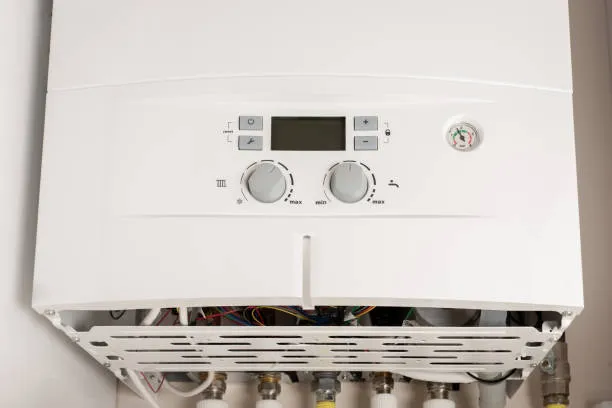
A combi (combination) boiler is a single, self-contained unit that heats your radiators and produces hot water on demand. No separate water tank. No hot water cylinder. Just one compact box — usually wall-mounted in a kitchen cupboard or utility space.
How a Combi Boiler Works
Cold water enters straight from the mains. The boiler heats it instantly via a heat exchanger and sends it directly to your taps or radiators. When you turn off the tap, the boiler stops heating. You only pay for what you use.
This on-demand design is what makes combis so popular in the UK. Roughly half of all British homes now run on combi boilers, and for good reason.
Combi Boiler Advantages
- Space-saving: No tanks or cylinders needed. In a London flat where every square foot counts, this matters.
- Energy-efficient: No stored water means no heat loss from a cylinder. Modern A-rated combis can reach 94% efficiency.
- Fresh water: Water comes straight from the mains — no stagnation in a tank.
- Faster installation: A like-for-like combi swap takes a single day. Less disruption, lower labour costs.
- Lower upfront cost: Combi boiler installation in London typically runs £3,125–£3,900 for a standard setup.
Combi Boiler Disadvantages
- Struggles with demand: Run two showers simultaneously and the flow rate drops. The boiler can only heat water as fast as it flows.
- Depends on mains pressure: Weak mains pressure equals weak showers. This is a real issue in some older London boroughs.
- No backup hot water: Boiler breaks down? You lose heating and hot water in one go.
- Not ideal for large homes: A 40kW combi might technically power a four-bed house, but it won’t deliver satisfying performance.
Best Combi Boiler Sizes
| Property Size | Radiators | Bathrooms | Recommended Output |
|---|---|---|---|
| 1–2 bed flat | Up to 10 | 1 | 24–27 kW |
| 2–3 bed house | 10–15 | 1–2 | 28–34 kW |
| 3–4 bed house | 15–20 | 2 | 35–42 kW |
What Is a System Boiler?
A system boiler sits between old-fashioned conventional boilers and modern combis. It heats your radiators directly, but it also stores hot water in a separate cylinder. The built-in pump and expansion vessel mean fewer external components than a conventional setup.
How a System Boiler Works
Water enters from the mains, gets heated by the boiler, and splits in two directions. Some goes to your radiators. The rest fills a hot water cylinder — typically 120 to 300 litres — ready for when you turn on a tap. Most households programme the cylinder to heat overnight, ensuring hot water is ready for morning routines.
System Boiler Advantages
- Handles multiple bathrooms: Two showers running at once? No problem. The stored cylinder delivers consistent pressure and temperature.
- Works with low mains pressure: Because the cylinder stores water, you’re less dependent on strong mains flow. Ideal for older London properties.
- Compatible with solar thermal: Planning to add solar panels later? System boilers integrate easily with solar thermal cylinders.
- Consistent performance: No temperature drops when someone flushes a toilet while you’re in the shower.
- Faster hot water recovery: Modern cylinders reheat in 20–40 minutes, depending on size.
System Boiler Disadvantages
- Needs space for a cylinder: You’ll need an airing cupboard or utility room. In a Central London micro-flat, this is often impossible.
- Heat loss from the cylinder: Even well-insulated cylinders lose some heat. This slightly reduces overall efficiency compared to a combi.
- Higher upfront cost: System boiler installation in London averages £4,150, including the cylinder.
- Limited by cylinder size: Once the stored hot water runs out, you wait for the reheat cycle.
Best System Boiler Sizes
| Property Size | Radiators | Bathrooms | Recommended Output |
|---|---|---|---|
| 2–3 bed house | Up to 15 | 1–2 | 18–24 kW |
| 3–4 bed house | 15–20 | 2–3 | 24–30 kW |
| 4+ bed house | 20–28 | 3+ | 30–42 kW |
Combi Boiler vs System Boiler: Side-by-Side Comparison
| Feature | Combi Boiler | System Boiler |
|---|---|---|
| Space required | Just the boiler unit — fits in a cupboard | Boiler + hot water cylinder (needs airing cupboard or utility room) |
| Hot water delivery | On-demand, 11–16 litres per minute | Stored in cylinder (120–300 litres), consistent pressure |
| Best for | 1–3 people, 1 bathroom, flats and small houses | 4+ people, multiple bathrooms, medium to large houses |
| Simultaneous use | Struggles with multiple outlets | Handles multiple showers and taps with ease |
| Energy efficiency | Very high — no stored water heat loss | Good — slight heat loss from cylinder, but modern cylinders are well-insulated |
| Installation time | 1 day (like-for-like swap) | 1–2 days (includes cylinder setup) |
| Typical London cost | £3,125 – £3,900 installed | £4,150 installed with cylinder |
| Mains pressure dependency | High — weak pressure = poor performance | Low — cylinder provides consistent delivery |
| Backup hot water | None — total failure means no hot water or heating | Cylinder retains some heat briefly; some setups allow electric backup |
| Solar compatibility | Limited | Excellent — integrates with solar thermal cylinders |
| Property types | Flats, new builds, small to medium houses | Medium to large houses, homes with multiple bathrooms |
Which Boiler Is Right for Your London Home? A Step-by-Step Decision Process
Step 1: Count Your Bathrooms
One bathroom and no plans to add another? A combi boiler is probably your answer. Two or more bathrooms, or a family where multiple people shower at the same time each morning? A system boiler becomes the sensible choice.
Step 2: Assess Your Space
Do you have an airing cupboard, utility room, or loft space for a cylinder? If yes, a system boiler is viable. If you live in a compact flat with no storage space, a combi is your only realistic option.
Step 3: Check Your Water Pressure
Turn on your kitchen tap fully. Time how long it takes to fill a one-litre jug. Under 6 seconds is good pressure — combi-friendly. Over 10 seconds suggests weak mains pressure, which makes a system boiler more reliable. A Gas Safe engineer can measure this precisely during a site survey.
Step 4: Consider Your Future Plans
Adding an extension with an en-suite? Installing solar panels? Planning to sell in two years? A system boiler’s flexibility pays off for growing families and eco-conscious homeowners. A combi suits those with stable, predictable needs.
Step 5: Factor in Your Budget
A combi boiler installation in London costs £3,125–£3,900. A system boiler with cylinder installation runs closer to £4,150. However, running costs over 10–15 years can flip this equation. A system boiler in a large home avoids the combi’s constant struggle to meet demand, which actually wastes energy.
Real-World Use Cases: London Homes We’ve Worked On
Case 1: The Battersea One-Bed Flat
A young professional in a modern one-bed flat with one bathroom and a small kitchen. Mains pressure was strong at 2.5 bar. We installed a 28kW Worcester Bosch combi, wall-mounted in the kitchen cupboard. Total cost: £3,200. The client now has instant hot water, lower energy bills, and reclaimed the space where an old cylinder used to sit.
Case 2: The Ealing Four-Bed Semi
A family of five in a 1930s semi with two bathrooms and an en-suite. Mains pressure was poor at 1.2 bar. Their old combi couldn’t run two showers at once. We fitted a 30kW system boiler with a 250-litre unvented cylinder in the airing cupboard. Total cost: £4,400. The family now runs three showers simultaneously without a temperature drop.
Case 3: The Islington Victorian Terrace
A couple renovating a two-bed Victorian terrace. They had one bathroom but planned a loft conversion with a second. Mains pressure was borderline at 1.8 bar. We recommended a system boiler with a 180-litre cylinder — slightly over-spec for now, but ready for the extension. Total cost: £4,100. No regrets when the loft bathroom went in six months later.
Expert Tips: What Most Boiler Guides Won’t Tell You
Tip 1: Don’t Oversize Your Boiler
Bigger isn’t always better. An oversized combi cycles on and off constantly, wasting gas and wearing components faster. A 24kW combi is plenty for a one-bed flat. A 42kW combi in the same flat is money down the drain.
Tip 2: Consider a Storage Combi as a Middle Ground
Can’t decide? A storage combi (like the Vaillant ecoTEC Plus Store or Worcester Bosch Greenstar Highflow) has a small built-in hot water tank — typically 40–50 litres. It gives you a buffer for brief high-demand moments without needing a full cylinder. Perfect for two-bed homes with one bathroom where you occasionally want to run the bath and kitchen tap together.
Tip 3: Get a Power Flush with Any New Installation
London’s older pipework is often full of sludge and limescale. Fitting a new boiler onto dirty pipes is like putting a new engine in a car with a clogged fuel line. A power flush costs around £400 but protects your warranty and keeps efficiency high.
Tip 4: Always Check the Warranty Terms
A 10-year warranty sounds generous, but read the small print. Many manufacturers require annual servicing by a Gas Safe engineer and a magnetic filter (like a MagnaClean) to keep the warranty valid. Factor this into your total cost of ownership.
Tip 5: Don’t Ignore the Flue
London’s dense housing means flue positioning is often restricted. A combi in a kitchen cupboard needs a horizontal flue through an external wall. No suitable wall? You might need a vertical flue through the roof — adding £300–£800 to the job. Check this before you commit.
Common Mistakes London Homeowners Make
Mistake 1: Choosing based on price alone A £1,500 budget boiler with a 2-year warranty might seem like a bargain. When it breaks down in year three and costs £800 to repair, you’ll wish you’d spent £2,000 on a model with a 10-year warranty.
Mistake 2: Ignoring water pressure We see this constantly. A homeowner installs a combi in a low-pressure area and wonders why their shower is pathetic. Always get your mains pressure measured first.
Mistake 3: Forgetting about the cylinder Switching from a system boiler to a combi? That old cylinder needs removing and the pipes capping off. Some installers quote low by skipping this. It’ll cost you later.
Mistake 4: Not checking Gas Safe registration Every gas boiler installation in the UK must be carried out by a Gas Safe registered engineer. Always verify their ID card on the official Gas Safe Register website before work begins. Unregistered work is illegal and voids your home insurance.
Mistake 5: Skipping the magnetic filter A MagnaClean or equivalent filter catches sludge before it enters your new boiler. It costs £100–£150 installed. Without it, your boiler’s heat exchanger will clog within a few years.
How Much Does Boiler Installation Cost in London?
London prices run higher than the UK average due to elevated labour rates and demand. Here’s what to expect in 2026:
| Job Type | Typical London Cost |
|---|---|
| Combi → Combi (same location) | £3,125 – £3,900 |
| Combi → Combi (new location) | £3,500 – £4,500 |
| System/Regular → Combi conversion | £3,800 – £5,200 |
| System boiler with cylinder (new install) | £4,150 |
| System boiler with cylinder (replacement) | £3,200 – £4,500 |
| Power flush (recommended add-on) | £300 – £600 |
| Smart thermostat installation | £100 – £300 |
| Magnetic filter | £100 – £150 |
FAQ: Combi Boiler vs System Boiler
Can a combi boiler run two showers at once?
A standard combi boiler struggles to deliver satisfying flow to two showers simultaneously. Most combis produce 11–16 litres of hot water per minute. One modern shower uses 8–12 litres per minute. Do the maths — two showers means weak pressure and lukewarm water. A system boiler with a cylinder is the better choice for homes with multiple bathrooms.
Is a system boiler more expensive to run than a combi?
Not necessarily. While system boilers lose some heat from the cylinder, they avoid the combi’s energy waste in large homes. A combi constantly firing at full capacity to meet impossible demand is less efficient than a system boiler heating a cylinder once and using stored water. The real answer depends on your home size and usage pattern.
Do I need good water pressure for a combi boiler?
Yes — combi boilers rely entirely on mains pressure. Weak pressure means weak performance. System boilers are far more forgiving because the cylinder stores water at a consistent pressure. In London areas with known pressure issues — parts of Hampstead, Highgate, and some Victorian boroughs — a system boiler is often the safer bet.
What is the best boiler for a 3-bedroom house in London?
For a 3-bed house with one bathroom: a 28–34kW combi boiler from Worcester Bosch, Vaillant, or Viessmann. For a 3-bed house with two bathrooms: a 24–30kW system boiler with a 180–250 litre cylinder. The key variable isn’t bedrooms — it’s bathrooms and simultaneous hot water demand.
How long does a boiler installation take?
A like-for-like combi swap takes one day. A combi-to-system conversion or new system boiler with cylinder takes 1–2 days. Complex jobs involving pipework upgrades, boiler relocation, or power flushing can stretch to 2–3 days. Your Gas Safe engineer should give you a clear timeline during quotation.
Can I get a grant for a new boiler in London?
Possibly. The ECO4 scheme provides free or subsidised boiler replacements for low-income households receiving certain benefits. The Boiler Upgrade Scheme offers grants for switching from gas to heat pumps — not for like-for-like gas boiler swaps. Check with your energy supplier or local authority for eligibility.
Should I replace my boiler before it breaks?
If your boiler is over 15 years old, yes. Older boilers run at 60–70% efficiency. A modern A-rated boiler hits 92%+. For the average London household, that’s a saving of £300–£490 per year on energy bills. Over 10 years, the new boiler pays for itself — and you avoid the emergency call-out fee when it finally dies in January.
What size boiler do I need for my home?
Count your radiators and bathrooms, not just bedrooms. Up to 10 radiators and one bathroom: 24–27kW combi. 10–15 radiators and 1–2 bathrooms: 28–34kW combi or 18–24kW system. 15–20 radiators and 2–3 bathrooms: 35–42kW combi or 24–30kW system. Always get a professional heat loss calculation for accuracy.
Conclusion: Make the Right Choice the First Time
The combi boiler vs system boiler debate isn’t about which is “better” — it’s about which fits your home, your family, and your future plans. A combi boiler wins for compact London flats and small houses with one bathroom. A system boiler wins for larger homes, families, and anyone who values consistent hot water pressure.
Measure your space. Count your bathrooms. Check your water pressure. Then talk to a Gas Safe registered engineer who knows London properties — not just boilers.
At boilerinstallerlondon.uk, we’ve fitted thousands of boilers across every London borough. From Victorian terraces in Clapham to new builds in Canary Wharf, we know what works. Get a free, no-obligation quote and a proper site survey before you spend a penny. The right boiler, fitted by the right engineer, will keep your home warm and your showers hot for the next 15 years.